Download Vusb Driver

SPD USB Driver allows you to connect your Spreadtrum based chipset devices to the windows computer during the flashing.
All these SPD drivers are officially released by the SpreadTrum Company which have been scanned by the Antivirus Program before uploading on this page.
KORG USB-MIDI Driver/KORG USB-MIDI Driver (for Windows 10) Version:1.15 r43e Date:2021.02.10. KORG USB MIDI Driver for Windows. Diskette, download from the Internet or otherwise) and the copyright of the contents of any manual or other written document belong to Korg.
Huawei USB COM 1.0 USB SER USB Driver: Download. How to install Huawei USB Driver. Firstly, you need to download the USB Driver on your Computer. Extract the ADB USB Driver using WinRAR or 7zip. Right-click on my computer and then click on manage. Check on the left side there you can see the Device Manager option. The driver supports the following transceivers and receivers. ・IC-7100 ・IC-7200 ・IC-7300 ・IC-7410 ・IC-7600 ・IC-7610 ・IC-7850 ・IC-7851 ・IC-9100 ・IC-9700 ・IC-R8600; Thoroughly read the Installation Guide before installing orupdating the USB driver. Note: File Size: 7.67MB: File Type: zip: Manual: manual download page. Windows PTZ Virtual USB Driver (AW-JJLPTZ02): Software Download: PTZ Virtual USB Driver is an application software that runs on Windows. This makes it possible to use a remote camera in a network as a USB camera.
After successfully installing the driver on your Windows computer you will be able to connect your Spreadtrum chipset based mobile device during the flashing process or for connecting the mobile device to the PC.
About SPD USB Driver
SPD driver is a small file that allows a Spreadtrum device to communicate with the OS of a computer. These USB drivers help mobile users to perform multiple tasks on their Spreadtrum based device such as flashing SPD devices, unlocking, backup and restoring etc.
Additionally, it can also help you to restoration your Spreadtrum device’s IMEI numbers that are become invalid during the wrong flashing procedure.
It’s developed by SpreadTrum communications Inc that helps you to connect your mobile device to the windows computer without installing the ADB driver or any other driver.
It’s compatible with all versions of windows and straightforward to install on any versions of Windows.
Features
Support SPD Flash Tool:
It supports SPD Flash Tool (spd research tool), that is the official flash tools for SpreadTrum based devices and used to flash PAC firmware on Spreadtrum mobile device. SPD Upgrade tool also is known as SPD Flash Tool which is usually used to flash PAC format firmware on SpreadTrum (SPD Chipset) based devices.
Support WriteIMEI Tool:
It supports Write IMEI Tool to flash or repair your Spreadtrum device’s IMEI numbers that are become invalid during the wrong flashing procedure. You must have to Install SPD USB driver in order to repair your device IMEI numbers while using WriteIMEI Tool.
Support Box Software:
It supports multiple Box Software such as Volcano Box, Medusa Box, Piranha Box, Infinity Box and Miracle Box, etc. Miracle Box tool is used to fix the mobile devices software issues, especially of Chinese mobile devices based on supported CPUs.
Supported Operating system
Spreadtrum USB Driver works with all version of Windows operating systems like Windows XP, Windows Vista, Windows 7, Windows 8, and Windows 10 (32 bit or 64-bit version of Windows).
Sandisk Cruzer Usb Driver Download
Supported Box and Tools for SPD USB Drivers:
- Volcano Box Software
- Miracle Box Software
- SPD Research
- Piranha Box Software
- Infinity-Box Software
- SPD Upgrade Tool
Download SPD Driver for Windows Latest Version 2020
How to Install SPD Driver Manually
There are two ways to install the Spreadtrum driver it depends on which file you have downloaded. If you download .exe file Auto Installer, you just have to follow below steps to install the driver on your computer.
Method 1: Direct Installation
Step 1: First, extract the downloaded ZIP-file on your PC and open extracted folder to install the SPD driver.
Step 2: Spreadtrum USB Driver setup is available for both 32-bit and 64-bit.
Step 3: Double click to run .exe file and follow the screen instructions by click Next > Next > Finish. That’s All!
Method 2: Manual Installation
Any driver who does not have an executable (.exe) file for installation, you have to install it manually. You just have to follow the below steps to install the driver on your computer.
- Right-click on the downloaded SPD driver ZIP-file, extract zip files on your computer.
- Open Device Manager, in device Manager, click on the Action tab and select Add legacy hardware from its dropdown menu.
- Click on the “Next” button in the hardware wizard window.
- Select Install the Hardware that I manually Select from a list (advanced) and then click on Next Button.
- Now, select “Show All Devices” and click on the Next.
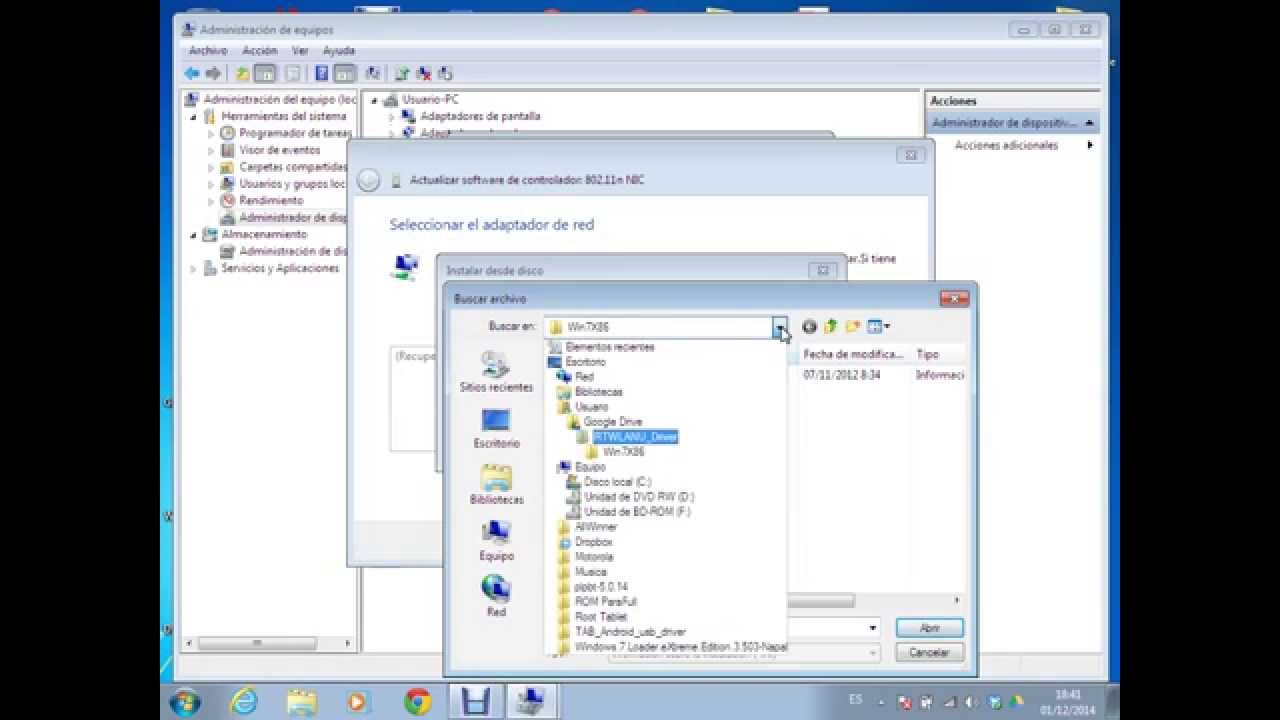
- Now, Click on “Have Disk” Button.
- Click on Browse and locate to the folder that extracted contains the USB driver files. Click “Open” when the file is selected.
- Click “OK” when the driver file is selected.
- Click Next. Click on Next again to install the driver.
- Now, Click on “Install this driver software anyway”.
- Now click on Finish to complete adding hardware wizard.
Video Tutorial to Install the SPD Driver Manually
Additional Information:
The Third-Party INF Does Not Contain Digital Signature: If you face digital signature error in installing the driver then See This Video for solve Digital Signature error in few clicks.
Tutorials: If you want a tutorial related to Android flashing, then head over to our Tutorial Section, where you will find lots of stuff related to Android.
How to Use SPD Flash Tool: If you want to learn that How to flash the firmware on any Spreadtrum Android Device then head over to this page we have shared Easy, step-by-step, illustrated instructions for Flash Pac Stock Rom on Android device.
SPD Driver: It’s mandatory to install the SPD (Spreadtrum) driver in order to flash the SPD based mobile device CPUs.
Credits: All the credit goes to SpreadTrum communications Inc because they created SPD USB driver and distributed with us free.
V-USB is a software-only implementation of a low-speed USB device for Atmel’s AVR® microcontrollers, making it possible to build USB hardware with almost any AVR® microcontroller, not requiring any additional chip.
Features
- Fully USB 1.1 compliant low-speed device, except handling of communication errors and electrical specifications.
- Example projects demonstrate device and host driver implementations on Linux, Mac OS X and Windows.
- Supports multiple endpoints: one control endpoint, two interrupt/bulk-in endpoints and up to 7 interrupt/bulk-out endpoints. (Note that the USB specification forbids bulk endpoints for low speed devices, but V-USB supports them to some degree.)
- Transfer sizes up to 254 bytes by default, more as configuration option.
- Comes with freely usable USB identifiers (Vendor-ID and Product-ID pairs).
- Runs on any AVR microcontroller with at least 2 kB of Flash memory, 128 bytes RAM and a clock rate of at least 12 MHz.
- No UART, timer, input capture unit or other special hardware is required (except one edge triggered interrupt).
- Can be clocked with 12 MHz, 15 MHz, 16 MHz 18 MHz or 20 MHz crystal or from a 12.8 MHz or 16.5 MHz internal RC oscillator.
- High level functionality is written in C and is well commented.
- Only about 1150 to 1400 bytes code size.
- You can choose the License: Open Source or commercial. Click here for details.
Hardware
This diagram shows a typical circuit for a bus powered device.
D1 and D2 are a low cost replacement for a low drop 3.3 V regulator chip, such as the LE33. Operating the AVR at higher voltages exceeds the common mode range of many USB chips. If you need to run the AVR at 5 V, add 3.6 V zener diodes at D+ and D- to limit the voltage.
For a prototyping board, please see metaboard.
Documentation Resources
- Download the V-USB package containing a short description and several simple code examples.
- V-USB's git repository is on github.com.
- V-USB Forum. Discuss ideas or get help from other users.
- V-USB Wiki is a public Wiki with lots of additional information.
- There is also an excellent step by step tutorial by Code and Life.
- Another third party tutorial can be found at workinprogress.ca.
- Objective Development's Developer Article: Implementing USB 1.1 in Firmware
Benefits over Alternative Solutions
Why not choose a microcontroller with built-in USB hardware? There are several of these available (see http://janaxelson.com). Or combine the microcontroller of your choice with a USB chip?
Download Usb Driver For Android
Advantages over Microcontrollers with USB Hardware
- Standard AVR controllers are usually easier to obtain.
- Most of the controllers with USB support are only available in SMD, which is almost impossible to handle for hobbyists.
- V-USB comes with a free shared Vendor- / Product-ID pair.
- A good free ANSI-C compiler (GNU gcc) and a free development system for Windows (WinAVR) are available for AVR.
- AVR controllers are faster than most of the controllers with integrated USB and cost less.
- Stand-alone operation: Some of the USB controllers download their firmware from the host computer into RAM. They don’t work without connection to the host.
- AVR controllers have on-chip EEPROM.
Update Usb Drivers Windows 10
Advantages over separate USB Peripheral
- No additional cost.
- No additional hardware complexity: simpler PCB, less failures.
- More freedom in the choice of USB descriptors.
- V-USB comes with a free shared Vendor- / Product-ID pair.
- Little hardware resources used: only two to three I/O pins.
- USB chips are often hard to obtain.
Download Usb Driver Samsung
Advantages over other Firmware-Only Implementations
A similar driver for the AVR series of microcontrollers is available from Igor Češko. Our USB driver has the following advantages over Igor’s driver:
- All customizable code written in ANSI-C and thus easier to maintain.
- Modular concept: easier to integrate into existing designs.
- Slightly smaller code size in spite of high level language modules.
- Faster: All encoding/decoding (USB requires NRZI coding and bit stuffing) is done in real-time, not in the main loop after storing away the raw data stream.
- More endpoints, USB descriptors can be better customized.
- V-USB comes with a free shared Vendor- / Product-ID pair.
- The level of standards conformance is documented (description of limitations and potential problems).
- Licensed under the terms of the GNU General Public License or alternatively under a commercial license.
Dick Streefland has stripped down an older version of V-USB to the basics. His code is easier to read and understand, but lacks some of the features found in V-USB:
- V-USB supports up to 4 endpoints. This allows implementing devices conforming to the HID or CDC device class.
- V-USB passes the tests in usb.org’s test utility.
- V-USB supports many different clock rates, some even with the internal RC oscillator.